Grown-Ups Corner
Gentle Picture Books About Worry for Ages 2-5
Worry can show up quietly. Sometimes it arrives when something is new, when a child does not know what comes next, or when a small thought suddenly feels much bigger than it did a moment ago.
A gentle picture book can help make that feeling easier to recognise. Instead of pushing for instant answers, it offers a calm way to sit together, slow things down, and begin talking.
Why stories can help with worry
Worry often lives in the space before words. A child may look wobbly, clingy, or full of what-if questions before they can explain what feels different.
That is where shared reading can help. A story gives children a softer way in: a character to look at, a mood to notice, and a feeling they can approach from the side rather than having to describe head-on.
The best picture books about worry for young children make space for that slow noticing. They do not need to be preachy to be helpful.
How Pea & Carrot approaches worry
Pea & Carrot: The Worry Book is built around familiar feelings rather than formal lessons. It stays close to the quiet, everyday moments children recognise, helping them notice worry without making it feel larger than it already does.
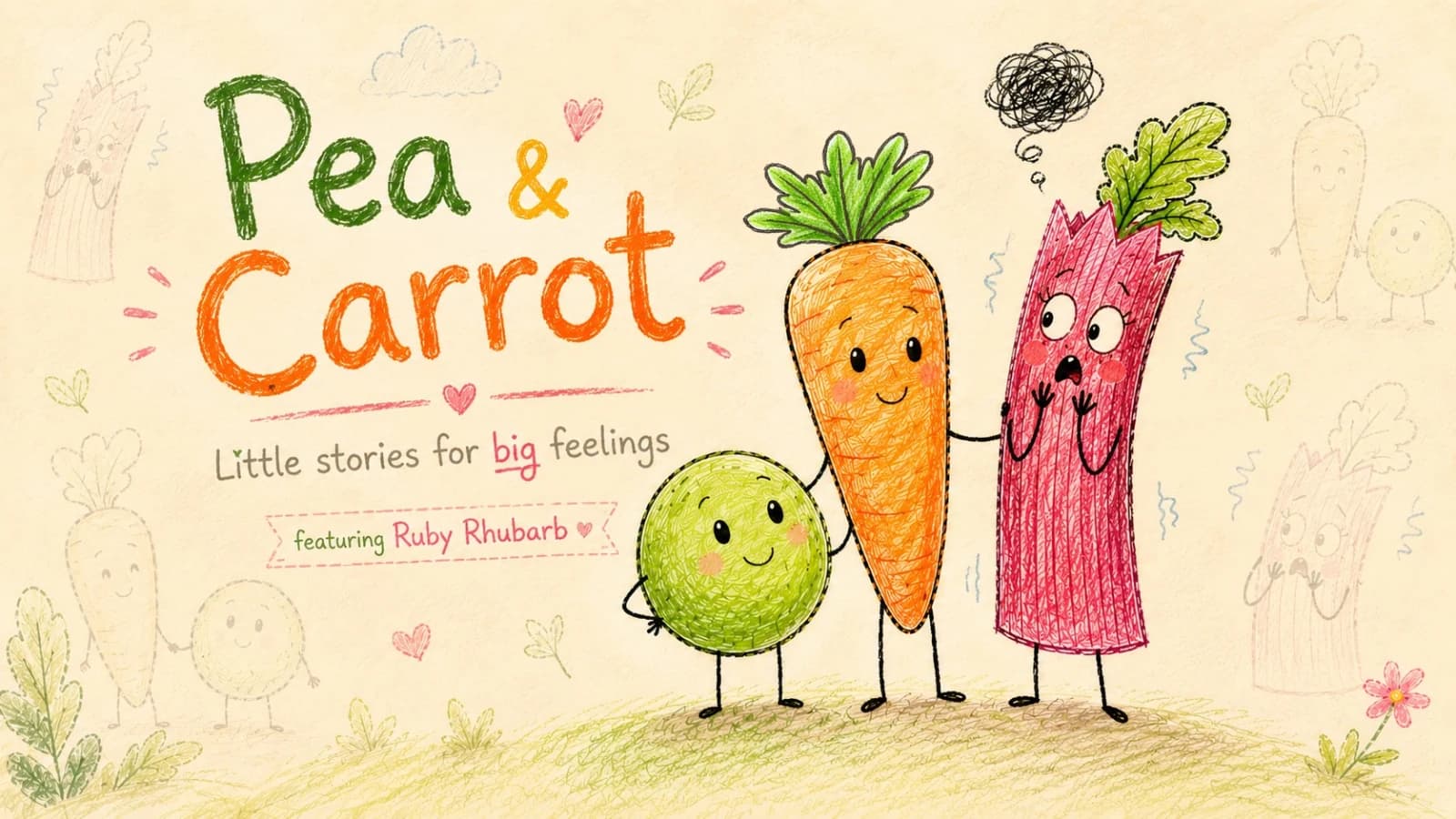
In the storybook journal companion, Ruby Rhubarb becomes the worried friend. Ruby can get over-excited, feel anxious, and worry over little things. To a child, those worries can feel huge, and the page meets that honestly.
The message stays steady and calm: I'm here with you. We can help the worry slow down. That is a very different tone from trying to fix the feeling on the spot.
A gentle way to use The Worry Book
Read the story at a calm time and notice what your child responds to. It may be a line, a face, a colour, or a moment that reminds them of something new or uncertain in their own day.
Afterwards, keep the invitation small. You might ask, "Was anything different today?" or "Did any part of that story feel like you?" A child does not have to answer in full sentences for the conversation to begin.
Some children will talk. Others will point, circle, or draw. Worry may feel grey one day and bright red the next. Letting a child show how they feel in their own way is often more useful than pressing for the right words too quickly.
Extending the conversation with the Feelings Time Capsule
Pea & Carrot Feelings Time Capsule gives children a quiet place to keep exploring feelings after the story ends. Alongside The Worry Book, it invites them to notice what their worry feels like and how big it feels on that particular day.
The worry section introduces Ruby Rhubarb and asks whether today's worry feels small or like a big Ruby Rhubarb worry. It also uses simple breathing prompts, drawing space, and colour choices to help children slow the feeling down enough to look at it.
For grown-ups, the journal becomes a place to record those little shifts that matter: a new word, a brave moment, a changed answer, or a time when a big worry was a little easier to talk about together.
Related reading
Explore the full Pea & Carrot feelings picture book series.
Read Books to Help Toddlers Talk About Anger for another gentle parent guide in the series.