Grown-Ups Corner
Picture Books About Sadness for Young Children
Sadness can be quiet. Sometimes a child just seems still. The happy has gone somewhere, and they are not quite sure where. Those moments can be hard to talk about because there is often less drama than anger and fewer clear answers than worry.
A gentle picture book can help make space for that feeling. It allows sadness to be noticed without hurrying it away, and it gives a child a calm place to begin saying what hurt, what changed, or what feels missing.
Why stories can help with sadness
Sadness often needs gentleness more than explanation. A child may not know why they feel low. They may only know that something feels different from before.
Shared reading offers company inside that feeling. A story can say, quietly, that this mood exists, that it can be spoken about, and that a child does not have to sit with it alone.
The best picture books about sadness for young children are usually simple. They give children a feeling to recognise and a safe moment to come back to.
How Pea & Carrot approaches sadness
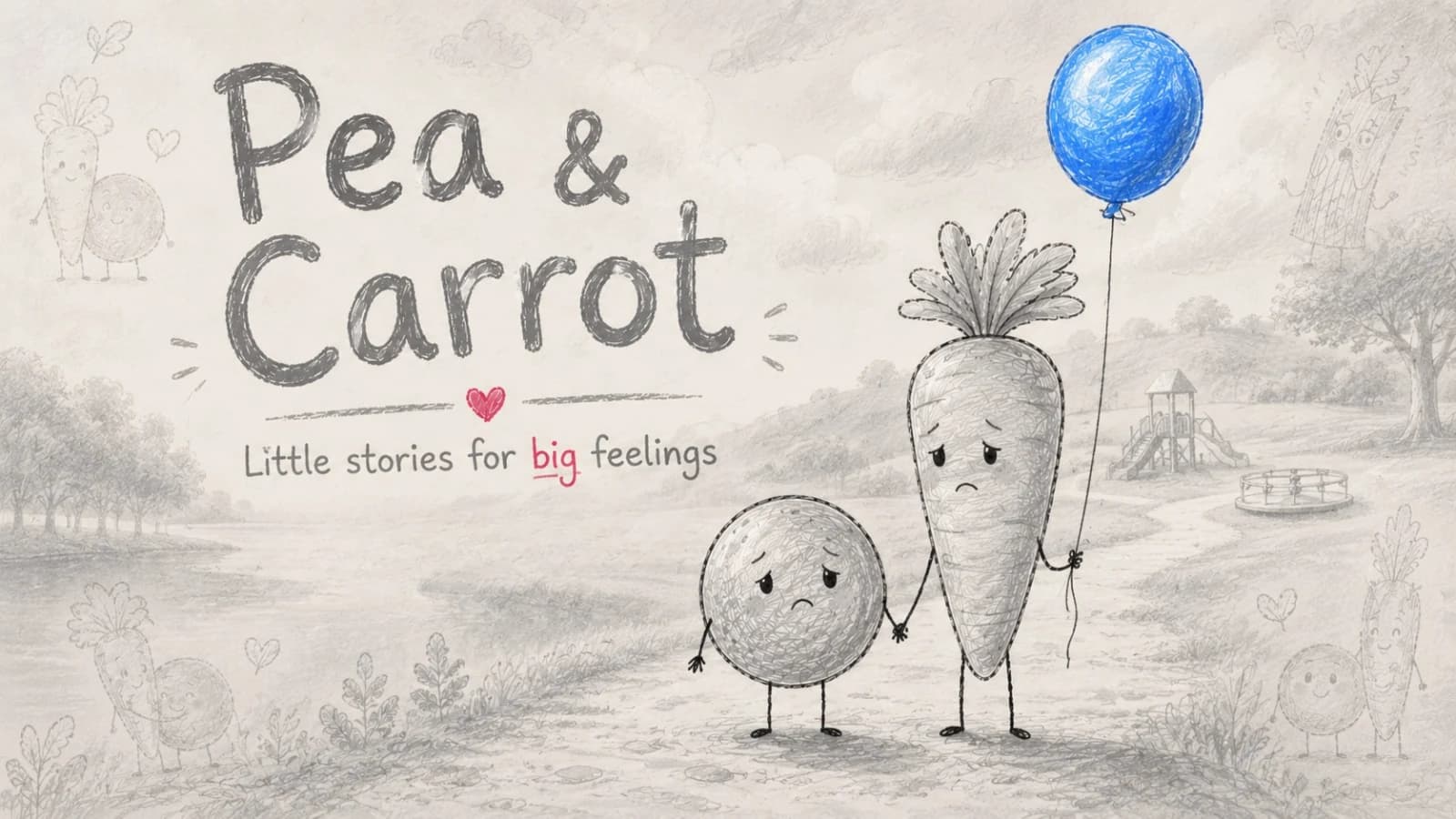
Pea & Carrot: The Sad Book keeps things small, quiet, and recognisable. It does not try to turn sadness into a lesson. It simply notices the feeling and stays close to it long enough for a child to understand that it belongs in the story too.
In the companion journal, the mood is captured in very simple language: Pea sat very still. The happy had gone somewhere. Pea was not sure where. That kind of phrasing mirrors the way sadness often feels to children, present but not always easy to explain.
The comfort comes through companionship. Sad can visit, but it does not have to stay forever. And most importantly, the child is reminded: you do not have to be alone.
A gentle way to use The Sad Book
Read the story slowly and let the quietness do some of the work. If your child wants to pause on a page, linger there. Sadness is not usually a feeling that responds well to rushing.
Afterwards, a small invitation is enough: "What made you sad?" or "Did any part of that feel familiar?" If your child would rather draw than talk, that still counts as part of the conversation.
Sometimes what helps most is not a solution but company. Sitting together with a book, a blank space, and no pressure can be enough to let a feeling soften.
Extending the conversation with the Feelings Time Capsule
Pea & Carrot Feelings Time Capsule gives sadness a quiet space to be noticed and revisited. Alongside The Sad Book, it invites children to tell or draw what made them sad and to return to the page whenever they need to.
The journal pages keep the tone gentle. Sadness is acknowledged without being dramatized. The message is steady and reassuring: we can come back to this anytime.
For grown-ups, those pages can become a record of small emotional milestones: when a child first names a loss, shares a quiet thought, or lets someone stay close while they are feeling low.
Related reading
Explore the full Pea & Carrot feelings picture book series.
Read Gentle Picture Books About Worry for Ages 2-5 and Books to Help Toddlers Talk About Anger for the other guides in this set.